
Deuteronomy, Leviticus, and the Birth of a God-Focused Nation
Why America was founded not politically, but Biblically

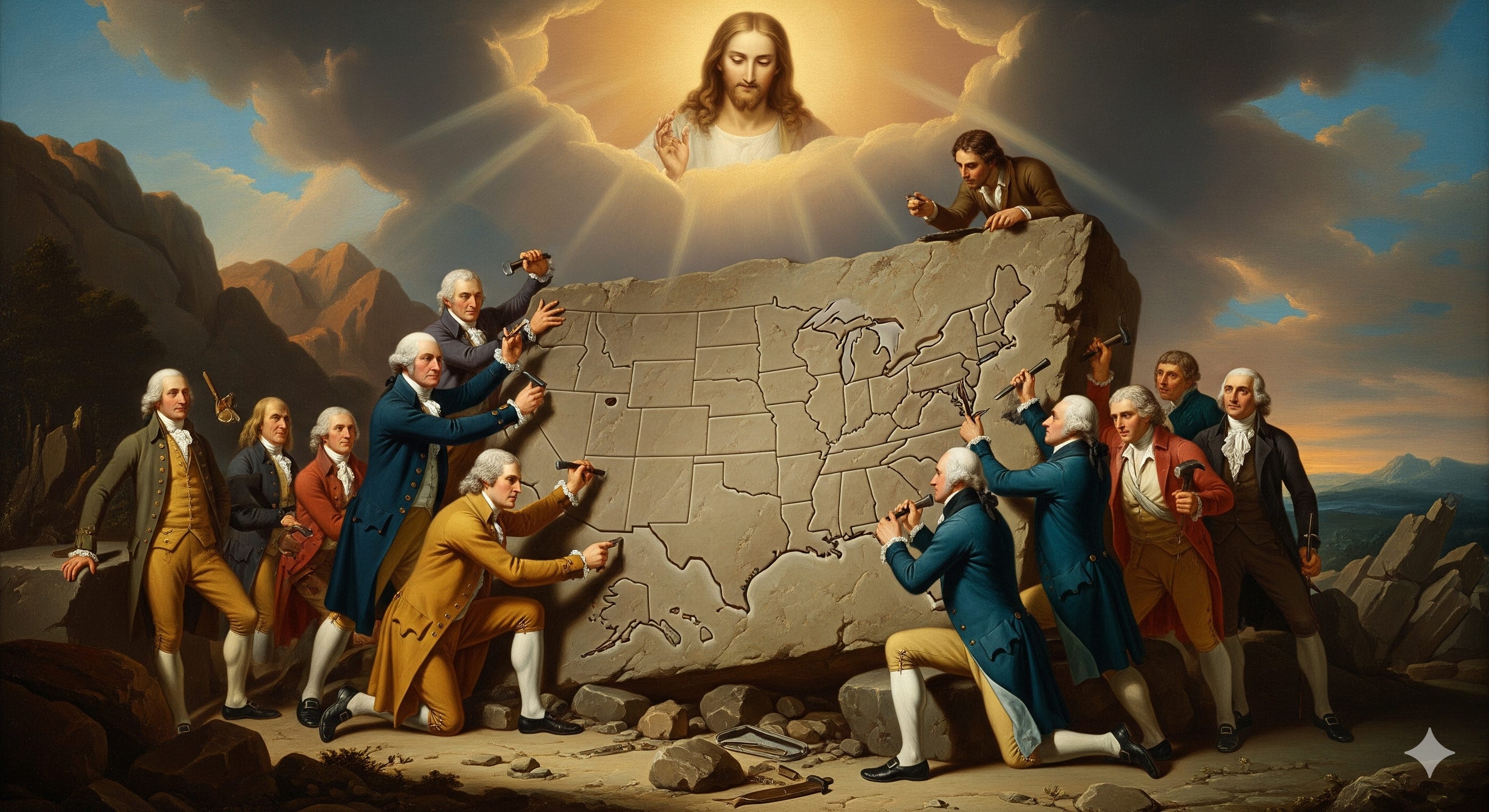
When we say the words “one nation under God, with liberty and justice for all,” we’re not simply reciting a pledge. We’re speaking into existence the founding DNA of America, a nation intentionally grounded in biblical principles and shaped by leaders who saw liberty not as a license to do whatever we wish, but as a responsibility to live under God’s higher law.
The story of America’s founding is no accident of politics. It is a story of conviction, sacrifice, and covenant rooted in the Lord’s doctrine.
The Biblical Roots: Leviticus and Deuteronomy
The early Americans, from Puritans in New England to revolutionaries in Philadelphia, read their Bibles not only as a private devotional, but as a handbook for public life.
Two books in particular, Leviticus and Deuteronomy, supplied the moral and legal vision for a society under God:
Leviticus 25:10 commands: “Proclaim liberty throughout all the land unto all the inhabitants thereof.” This verse is literally inscribed on the Liberty Bell, the most famous symbol of American independence. The context is the Year of Jubilee, when debts were released, land restored, and the enslaved set free. For America’s founders, liberty was not a human invention; it was a divine mandate.
Deuteronomy functioned like a constitutional blueprint. It demanded impartial courts (Deut. 16:18–20), limits on rulers (Deut. 17:14–20), public reading of the law for civic literacy (Deut. 31:9–13), equal justice for citizens and foreigners (Deut. 10:18–19), and care for the vulnerable (Deut. 14:28–29). These themes of justice, accountability, and covenantal duty echoed loudly in the sermons, pamphlets, and speeches that prepared colonists for independence.
The founders were not trying to copy ancient Israel line by line. They understood the difference between ceremonial law and civil society. But they drew from these Scriptures principles: that rulers must be subject to the law, that justice must be impartial, that liberty must be proclaimed to all, and that a nation without virtue cannot survive.
“For the Glory of God and the Advancement of the Christian Faith”
Long before 1776, America’s settlers already thought in covenantal terms. The Mayflower Compact (1620), the very first governing document in colonial America, explicitly stated that the settlers covenanted together “for the glory of God, and advancement of the Christian faith.” This was the DNA of the American project: a people organizing themselves not just for survival, but to live under God’s rule.
By the 1700s, this covenantal vision was widespread. In fact, historians like Donald Lutz have shown that the most-cited book by America’s founding generation was Deuteronomy. Pastors preached it from pulpits. Politicians quoted it in debates. Ordinary colonists saw themselves as reliving Israel’s story of exodus from tyranny (Egypt/England) into a promised land of freedom.
The Founders’ Pledge: “Our Lives, Our Fortunes, and Our Sacred Honor”
When the 56 signers of the Declaration of Independence put pen to paper in July 1776, they were not making an academic argument. They were pledging their very lives. The final sentence of the Declaration reads:
“And for the support of this Declaration, with a firm reliance on the protection of Divine Providence, we mutually pledge to each other our Lives, our Fortunes and our sacred Honor.”
These were not empty words. Many of them lost everything, homes burned, businesses ruined, families scattered. Some were captured, some died in poverty. These men were wealthy landowners, lawyers, merchants, and farmers. They risked it all because they believed liberty under God was worth more than wealth, comfort, or safety.
Think about that: the American nation was not born out of convenience. It was born out of sacrifice, and it is what we still defend to this day, albeit some forget.
Liberty and Justice for All
The founders envisioned liberty not as chaos, but as an ordered freedom, freedom tethered to virtue. Without morality and self-restraint, liberty collapses into tyranny. This is why George Washington said in his Farewell Address (1796): “Of all the dispositions and habits which lead to political prosperity, religion and morality are indispensable supports.”
The founders knew that without a shared moral compass, America would not endure. Their compass was the Bible. The Liberty Bell itself testifies to that.
“Justice for all” also flows directly from these biblical principles:
Equal justice under the law (Lev. 24:22).
Impartial courts (Deut. 1:16–17).
Love your neighbor as yourself (Lev. 19:18).
Care for the widow, orphan, and stranger (Deut. 10:18–19).
These weren’t abstract ideals. They became the framework for a republic that sought to balance liberty with responsibility, rights with duties.
One Nation Under God
When the phrase “one nation under God” was added to the Pledge of Allegiance in 1954, it wasn’t inventing something new. It was articulating something that had always been true about America’s self-understanding. From the Mayflower Compact to the Declaration of Independence to Washington’s inaugural prayers, America saw itself as a covenant people under divine authority.
That does not mean every founder was a devout Christian; many were not. But it does mean the political culture they built was steeped in biblical ideas: covenant, accountability, liberty, justice, and sacrifice.
Why This Still Matters
Today, we can forget that our nation was founded not merely as a political project but as a moral one. The founders did not stake everything just to escape taxation, they staked everything to form a people capable of governing themselves under God.
Leviticus and Deuteronomy remind us that freedom is fragile without virtue, that justice requires impartiality and compassion, and that rulers themselves must submit to a higher law. America’s founders, in their best moments, understood this deeply.
As we look back on their words, sacrifices, and faith, may we also look forward, renewing the call to be “one nation under God, with liberty and justice for all.”
Let’s look directly at the source, Scripture itself, for clarity on the principles that shaped our nation. If we rely only on human opinions or feelings, too much is left open to interpretation. My desire is not to project my own ideas, nor to hear the thoughts of others, but to hear the Word of God and His doctrine alone. The Lord deserves, and even demands, that level of respect from us as believers.
1) Covenant as a National Charter (Deuteronomy’s “constitution” logic)
Deuteronomy presents Israel’s national life as a covenant, a binding charter between God and the people that sets the terms of public life.
Covenant renewal & national identity: Deut 26:16–19; 27:1–10; 29:1–15; 31:9–13; 31:24–29; 32 (Song of Moses).
Shema—core allegiance shaping the nation’s heart, home, & law: Deut 6:4–9; 11:18–21.
Public reading of law (civic literacy): Every 7 years, leaders must publicly read the law to men, women, children, and resident foreigners, so the whole nation “learns to fear the LORD” and obeys (Deut 31:9–13).
Blessings & curses—national consequences for corporate obedience/violation: Deut 28 (cf. Lev 26).
One law for all, native and sojourner: Lev 24:22 (equal accountability to the same standards).
Public meaning: The nation is not merely a geographic unit; it is a people under a higher moral authority. The covenant functions like a national charter, supreme law binding rulers and ruled alike.
2) Rule of Law, Not Rule of Men (impartial justice, anti-bribery, due process)
Judicial structure & standards
Local judges and officers in every town to administer righteous judgment (Deut 16:18–20).
Impartiality—no partiality to rich/poor; no bribes: Deut 16:19–20; Deut 1:16–17; Lev 19:15.
Appeals / higher court (central tribunal): complex cases go to the priests/central court; verdicts must be followed (Deut 17:8–13).
Due process & evidentiary safeguards:
Two or three witnesses required in criminal cases (Deut 17:6; 19:15).
Penalties for false testimony (measure-for-measure) to deter perjury (Deut 19:16–21).
Presumption against mob justice: careful inquiry before punishment (Deut 13:12–15; 17:2–5).
Sanctuary cities (manslaughter vs. murder): protect the accused from vengeance, distinguish intent, and require fair hearing (Deut 19:1–13).
Public meaning: Israel’s courts are designed for impartial justice, evidence-based judgments, and checks against passion, bribery, and abuse, key building blocks of a just commonwealth.
3) Limited Executive Power & Separation-of-Powers Logic
Deuteronomy limits kingship and embeds checks that anticipate separation-of-powers instincts.
Limits on the king’s wealth & foreign entanglements: must not multiply horses (military power), wives (alliances), or silver/gold for himself (Deut 17:16–17).
The king under the law: he must write his own copy of the law, read it all his days, stay humble, and not exalt himself above fellow citizens (Deut 17:18–20).
Priests/judges as an independent judicial authority (Deut 17:8–13).
Prophets as moral auditors who confront idolatry and corruption (Deut 13:1–5; 18:15–22).
Public meaning: Civil authority is not absolute. Leaders are under the written law and morally accountable to God; religious-legal authorities and prophetic voice constrain executive excess.
4) Economic Order: Property, Land, Jubilee, Honest Weights, and Anti-Fraud
Property & land tenure
Jubilee & redemption (Leviticus 25):
Every 50th year: “Proclaim liberty throughout all the land unto all the inhabitants thereof”…. returning ancestral land, freeing Hebrew debt-servants, resetting economic imbalances (Lev 25:8–17, 23–24, 39–41).
The land ultimately belongs to God; Israelites are stewards, not absolute owners (Lev 25:23).
Boundary stones: no moving property markers (Deut 19:14).
Inheritance protection: e.g., daughters of Zelophehad (Num 27, outside Deut/Lev but part of the land ethic).
Fair commerce
Honest weights & measures (no rigged scales): Lev 19:35–36; Deut 25:13–16.
No theft, no fraud, no lying in business: Lev 19:11–13.
Prompt wages: do not hold back a laborer’s pay overnight (Lev 19:13; cf. Deut 24:14–15).
No charging interest to the poor among “your brotherhood”: Lev 25:35–37; Deut 23:19–20 (nuances on foreigners noted in Deut).
Public meaning: The Torah mandates transparent markets, sound money (honest measures), and property rights, tempered by periodic relief (Jubilee; redemption) so capital formation does not become permanent stratification.
5) Social Safety Nets, Poverty Relief & Humane Labor
Care for the vulnerable is a civic duty under God’s law:
Gleaning: leave the edges of fields and leftover sheaves for the poor, the sojourner, the fatherless, and the widow (Lev 19:9–10; 23:22; Deut 24:19–22).
Triennial tithe: every third year, store local tithes to feed Levites (who have no land), sojourners, orphans, widows (Deut 14:28–29; 26:12–13).
Open-hand ethic & debt remission: Deut 15:1–11 (release debts in the sabbatical year; do not be hard-hearted).
Humane manumission: release Hebrew servants in the seventh year and send them away generously (Deut 15:12–15).
Sabbath rest extended to servants, foreigners, and animals (Lev 23:3; Deut 5:12–15).
Public meaning: The law embeds structured compassion, private property remains, but obligations to the needy are woven into the economy.
6) Public Health, Safety, and Tort-like Duties
Sanitation & camp hygiene: Deut 23:12–14.
Roof parapet (duty of care to prevent foreseeable harm): Deut 22:8.
Animal care & humane treatment: do not muzzle an ox treading grain (Deut 25:4); sabbath rest includes livestock (Deut 5:14).
Quarantine & sanitation for disease: Leviticus 13–15 (regulations for skin diseases and bodily discharges).
Restitution for injury or damage (broader Pentateuch principle; cf. Lev 24:18–21 for proportional justice).
Public meaning: The law recognizes negligence, foreseeability, proportional response, and community health as legitimate public concerns.
7) Family, Sexual Ethics, & Civic Morality
Family as formative institution: parental catechesis (Deut 6:6–9; 11:18–21).
Sexual ethics to safeguard households & lineage: Lev 18; 20 (moral boundaries to protect family and community).
Ban on cult prostitution & unholy commerce: Deut 23:17–18.
Truthfulness & oaths: Lev 19:11–12; Deut 6:13; 10:20.
No slander; love your neighbor: Lev 19:16–18 (cf. Jesus’ summary, Matt 22:39).
Public meaning: Sustainable public order rests on moral households, truth-telling, and neighbor-love embedded in law.
8) Aliens, Strangers, and Equal Justice Under Law
Love the sojourner; remember Egypt: Deut 10:18–19; 24:17–18.
Equal law for citizen and resident alien: Lev 24:22.
Gleaning and tithes explicitly include the foreigner (Lev 19:9–10; Deut 14:28–29; 26:12–13).
Public meaning: The law humanizes the outsider and binds the nation to treat them justly as image-bearers.
9) Civil Order, Policing, and Proportionality
Lex talionis (proportional justice) to restrain vengeance and match penalties to harms (Deut 19:21; cf. Lev 24:19–20).
No kidnapping (human trafficking): Deut 24:7.
No partiality in judgment (rich or poor): Lev 19:15; Deut 1:17.
Punishment by the court, not private vendetta: repeated due-process provisions (Deut 17; 19).
Public meaning: The community is under law-governed order, not mob rule; proportionality and public adjudication are foundational.
10) National Security & Just-War-Like Restraints
Rules for warfare: Deut 20 (offer of peace; proportionality; exemptions for the faint-hearted and new householders; protections for fruit trees as a form of environmental restraint - Deut 20:19–20).
Military conscription tempered by humanitarian exemptions: Deut 20:5–9.
Public meaning: Even in war, restraint and humanity are required.
11) The Liberty Bell & Leviticus (American symbol rooted in Torah)
The Liberty Bell bears Leviticus 25:10 in the King James wording: “Proclaim LIBERTY throughout all the Land unto all the Inhabitants thereof.” The National Park Service notes that the verse refers to the Jubilee, return of property and liberation of slaves every 50th year. See also historical summaries that emphasize the text’s Jubilee context and its later adoption by abolitionists. (source)
Public meaning: One of America’s most famous civic emblems of liberty is explicitly inscribed with Leviticus 25:10, linking the nation’s liberty ideal to a biblical vision of reset, release, and restoration.
12) “Under God”: Covenant Thinking & Early American Political Culture
While the United States Constitution prohibits a national establishment of religion and bars religious tests for office, many founding-era texts and practices show a biblically literate culture drawing on covenant concepts:
Mayflower Compact (1620): the signers covenant together “for the Glory of God, and Advancement of the Christian Faith”, to form a civil Body Politick and enact “just and equal Laws.” (source)
Northwest Ordinance (1787), Art. 3: “Religion, morality, and knowledge, being necessary to good government and the happiness of mankind, schools and the means of education shall forever be encouraged.” (source)
Scripture in founding discourse: Political scientist Donald S. Lutz found the Bible was the single most cited source in American political writings (1760–1805)—with Deuteronomy the most cited book, exceeding references to Enlightenment writers like Locke in the literature sampled. (source)
Public meaning: Many colonists and founders were steeped in biblical categories (especially Deuteronomy’s covenantalism). Sermons and pamphlets frequently framed public life in terms of covenant, rule of law, consent of the governed, mutual obligations, and moral accountability before God, themes resonant with Deuteronomy and Leviticus. (Note: This influence is not identical to formal theocracy; the Constitution itself establishes no church, yet the culture’s political vocabulary often drew on Scripture.)
13) Specific Parallels & Echoes (Torah → American civic ideals)
a) Law above rulers
Torah: the king is under the written law and must read it daily (Deut 17:18–20).
American echo: rule of law, written constitution, checks and balances (animated partly by a biblical realism about human nature; cf. Deut 17; also Jer 17:9 as often invoked by later thinkers).
b) Impartial courts & due process
Torah: impartiality, no bribes, multiple witnesses, careful inquiry, punishment for perjury (Deut 1:17; 16:18–20; 17:6–13; 19:15–21; Lev 19:15).
American echo: independent judiciary, due process, perjury statutes, standards of evidence.
c) Equal dignity & neighbor-love
Torah: equal law for native and sojourner (Lev 24:22), love your neighbor as yourself (Lev 19:18), justice for the stranger (Deut 10:18–19).
American echo: the moral claim that rights are endowed by a Creator and universal in scope (cf. the Declaration’s “all men are created equal,” though America would struggle to realize this fully).
d) Property rights & honest commerce
Torah: boundary stones (Deut 19:14), redemption/Jubilee (Lev 25), honest measures (Lev 19:35–36; Deut 25:13–16).
American Echo: Property Protections, Bankruptcy and Debt Relief Traditions, Weights-and-Measures Laws, and Anti-Fraud Rules.
e) Civic education & public virtue
Torah: public reading of law; teach children diligently (Deut 6:6–9; 31:9–13).
American echo: public education valued for “religion, morality and knowledge” to sustain self-government (Northwest Ordinance).
f) Care for the vulnerable
Torah: gleaning, triennial local tithes, debt remission, humane labor policy (Lev 19:9–10; Deut 14:28–29; 15:1–15; 24:19–22).
American echo: civic charity and civil society institutions; local safety nets (historically church/voluntary associations); later public policies addressing poverty.
14) Leviticus & Deuteronomy: The Moral Spine
A sampling of pillar texts that together sketch the social architecture:
Worship & allegiance: Deut 6:4–9; 12 (centralize worship); Lev 19:2 (“Be holy, for I the LORD your God am holy”).
Courts & justice: Deut 16:18–20; 17:6–13; 19:15–21; Lev 19:15.
Executive limits: Deut 17:14–20.
Civic literacy: Deut 31:9–13.
Labor & rest: Deut 5:12–15; Lev 23:3.
Property & economy: Lev 25; Deut 19:14; Lev 19:35–36; Deut 25:13–16.
Poor, widow, orphan, stranger: Lev 19:9–10; Deut 10:18–19; 14:28–29; 24:19–22; 26:12–13.
Public health & safety: Lev 13–15; Deut 22:8; 23:12–14.
War restraints: Deut 20:5–20.
Proportionality & punishment: Lev 24:19–20; Deut 19:21.
Truthfulness & oaths: Lev 19:11–12; Deut 6:13; 10:20.
Neighbor-love & social peace: Lev 19:16–18.
15) A Note on Differences (Ancient Israel vs. Modern America)
Ancient Israel was a covenant nation with cultic (sacrificial/temple) law tightly integrated into civil life.
Modern America is a constitutional republic with disestablishment (no national church), religious liberty, and pluralism.
Continuity: Many moral-legal principles (rule of law, limits on rulers, due process, property, honest commerce, care for the vulnerable, civic education for virtue) proved transferable as wisdom for nation-building.
Discontinuity: America did not adopt the ceremonial or civil-penal code of Israel as statutory law; instead, biblical ideas shaped political culture, rhetoric, and institutional instincts, alongside English common law and Enlightenment thought.
16) Pulling it Together
Leviticus supplies the holiness ethic for everyday life (love your neighbor, honest trade, care for the poor, Jubilee reset), anchoring a humane economy and social order.
Deuteronomy functions like a civic catechism and constitutional charter, covenant, public reading, impartial courts, checks on rulers, and a comprehensive vision for justice, welfare, security, and education under God.
Historically, Americans reached instinctively for these Scriptures to describe political hope and national duty. The Liberty Bell itself bears Leviticus 25:10, a Jubilee sentence turned into a national symbol of freedom. Early American compacts and laws openly invoked God and public virtue (e.g., Mayflower Compact, Northwest Ordinance). And scholarly analysis shows that Deuteronomy, of all works, was the single most cited text in founding-era political discourse, underscoring how deeply these biblical frameworks shaped the American imagination.
In my next article, I want to break down the importance of accountability and why believers must understand the foundational truths of our faith. Too often I hear Christians say, “We are not meant to be political.” But our nation’s very framework was built upon God’s Word. So I must ask: if our nation has strayed from those foundations, does that mean we stop standing up for them?
Ask yourself that.
I came across this through LinkedIn and wanted to look a little deeper. I grew up in a very Christian community, and while I’m not a practicing Christian now, I still believe a strong Puritan foundation and upbringing can be immensely helpful and beneficial. I want to be clear that I have a great deal of respect for the Christian faith. That said, I also think this assessment is fundamentally flawed. The idea that America is or was ever intended to be a uniquely “Christian nation” is historically inaccurate, and framing it that way is deeply troubling. In fact, that belief itself often fuels the very social and political tensions we’re struggling with today.
I respect the role of the Bible and religion as a shared cultural language in early America, but that’s not the same as being our legal foundation. Most of the key founders were more accurately theists or deists, not orthodox Christians. And one of the earliest diplomatic documents, the Treaty of Tripoli (1797), stated clearly that “the government of the United States is not, in any sense, founded on the Christian religion.”
We can and should respect the role Christianity played in American history. The Bible served as a shared cultural language, and Christian communities played a significant role in shaping early civic life. But that doesn’t mean America was founded as a Christian nation. Moving forward, the healthiest path is to honor those historical values while also maintaining a fundamental separation between politics and religion. That way, we respect the past without distorting it, and we preserve a civic space that works for people of all beliefs.
It’s hard to imagine our nation surviving if it were forced to function as a Christian nation-state. That would be something entirely new and likely not something devout Christians or secular citizens would truly want. What has kept the U.S. strong is the balance struck by the founders: a theistic but pragmatic worldview that drew on Christian culture without enshrining it into law. To now push the country toward being something it never was does a disservice both to the founders’ intent and, I would argue, to Christianity itself.