
The Unhurried Hand: Understanding the Parable of the Weeds

The teachings of Jesus often reveal profound truths about God's nature, blending deep compassion with absolute justice. A perfect example is the Parable of the Weeds, found in the Gospel of Matthew (Chapter 13). This short, clear story offers an incredible insight into why there is evil and suffering in the world, and why God allows it to continue…for a time.
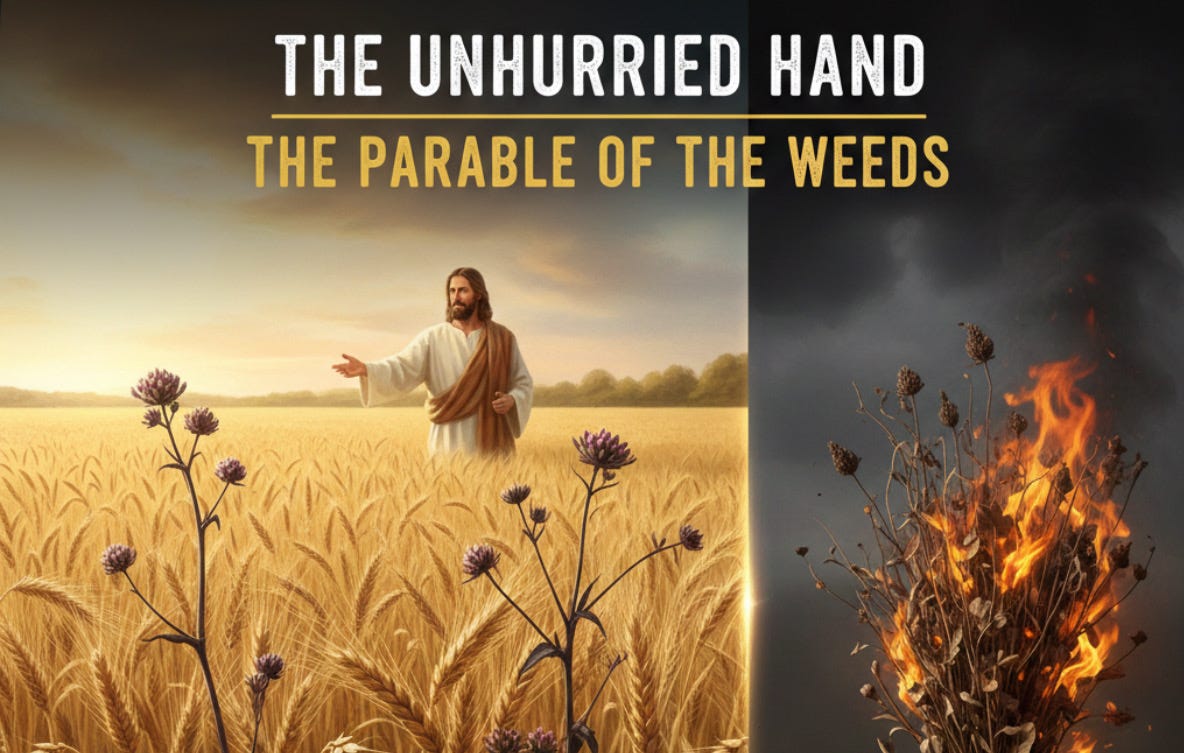
The Story
In the parable, a man sows good seed (wheat) in his field. But while he sleeps, an enemy sneaks in and sows bad seed (weeds, specifically "tares" or darnel) among the good grain.
When the plants begin to grow, the difference becomes clear. The servants, recognizing the damage the weeds will do, immediately ask the master: "Should we go and pull them up?"
The master’s answer is the critical teaching of the parable: "No, because while you gather up the weeds you also uproot the wheat with them. Let both grow together until the harvest."
At the time of the harvest, he instructs his workers to first gather the weeds, tie them into bundles to be burned, and then gather the wheat into his barn.
A Reflection on God's Patience
The master’s decision to wait—to let the wheat and the weeds grow side-by-side—is a powerful reflection of God's patience and great mercy toward humanity.
1. Protecting the Believer (The Wheat): In the natural world, the roots of tares and wheat often intertwine, especially when they are young. To pull up a weed prematurely would inevitably damage or destroy the good grain. This shows God’s priority is protecting and sustaining those who believe in Him. He delays judgment to protect His own.
2. Allowing Time for Repentance (The Weeds): The delay also reflects God giving time for the "weeds"—those who oppose Him, sin, or deny His name—to change. God does not wish for anyone to perish. He gives ample opportunity for hearts to turn toward Him before the final judgment.
The Assurance of Justice
While the parable emphasizes patience, it does not minimize the severity of sin. The master clearly states that the separation will happen.
• The Harvest is Coming: The "harvest" represents the end of the age and the final judgment. It is the moment when patience ends and justice begins.
• Final Destiny: The wheat is safely gathered into the barn (eternal life), and the weeds are tied to be burned (judgment and the Lake of Fire).
It’s beautiful. The patience, the love, the care of the process Jesus has?! Wow..
This parable serves as a vital reminder. We should fear Jesus because He is the righteous judge who will ultimately separate good from evil. But we should also understand His great mercy, knowing that the suffering and injustice we see in the world are permitted for a time, fueled by a desire for all to find salvation before the final decree is made.