
Why We Need Both the Lawmakers and the Builders

In a recent conversation online, I asked how far away we are from open-source phones becoming available at scale for everyday people. The question matters because, as Jack Dorsey and others have said, without open-source hardware, even the best “sovereignty software” is limited.
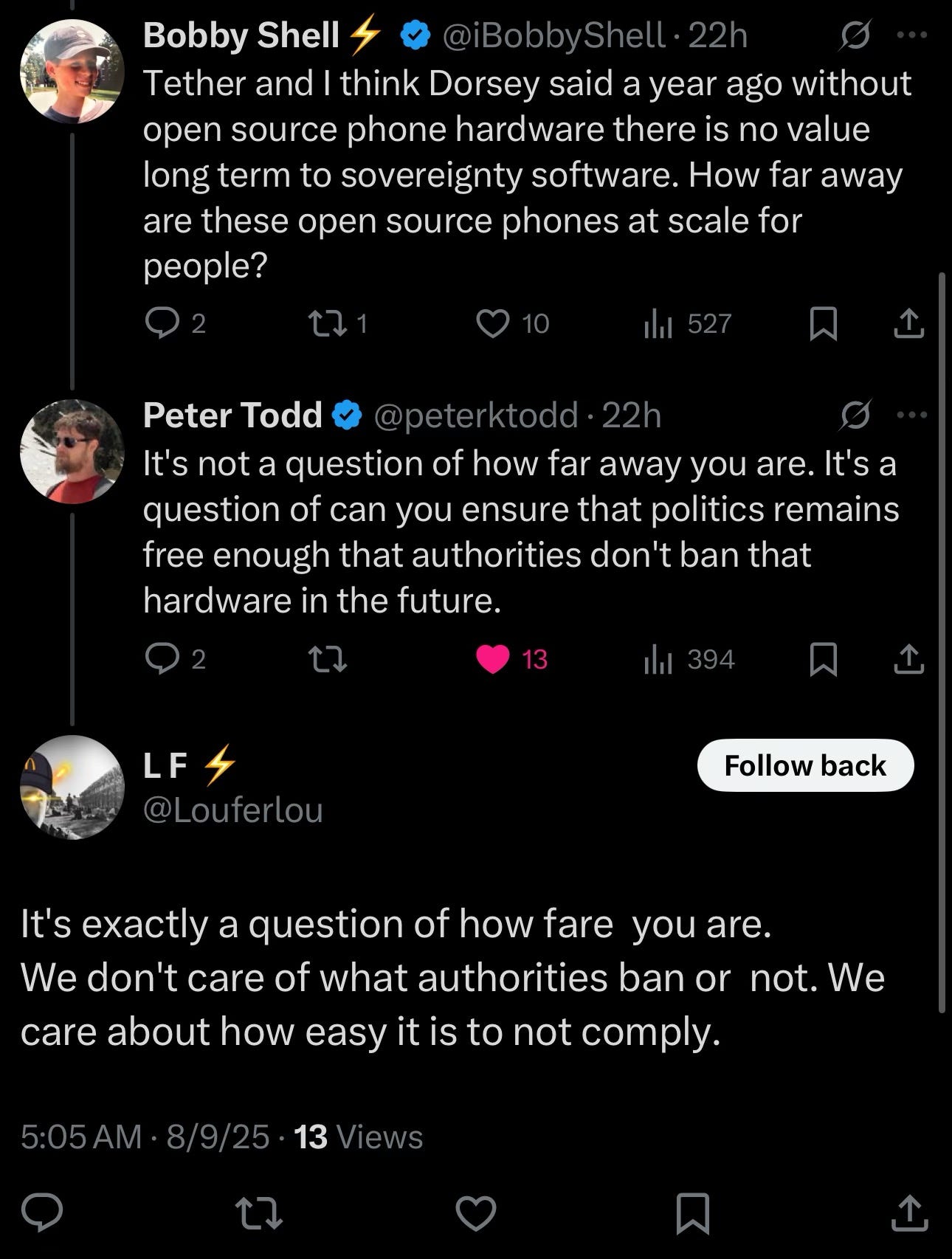
The responses I got highlighted two important truths:
1. We need political freedom to protect our rights.
Peter Todd made the point that it’s not just about “how far away” we are from building the technology. It’s also about whether politics stays free enough for that technology to exist at all. If governments ban the hardware, the work of the builders may never reach the people. This means there’s value in people fighting for laws and policies that protect our ability to own, use, and share open technology. Without legal protection, the door can be shut before we even step through it.
2. We need technology that enforces our rights, no matter the law.
Another reply argued the opposite focus: it is about how quickly we can build and deploy the tools. Governments will always have bans, restrictions, and regulations. What matters most is building hardware and software that make it easy for people to resist bad laws—tools that give individuals control regardless of political approval. This is the “build it so we can’t be stopped” approach.
Both are right.
The truth is, these two perspectives are not in conflict—they are complementary. We need people who fight for the political freedoms that keep the door open. We also need people who create the technology that keeps the door from ever being locked.
History shows that rights are defended in more than one way. Some march in the streets or lobby lawmakers. Others work quietly in labs, basements, and workshops, building the tools that make freedom real in our daily lives. Both efforts matter, and when they work together, they reinforce each other.
So whether you feel called to fight in the public square or build in the workshop, know this: both roles are part of the same mission—to protect and preserve human freedom in the digital age.